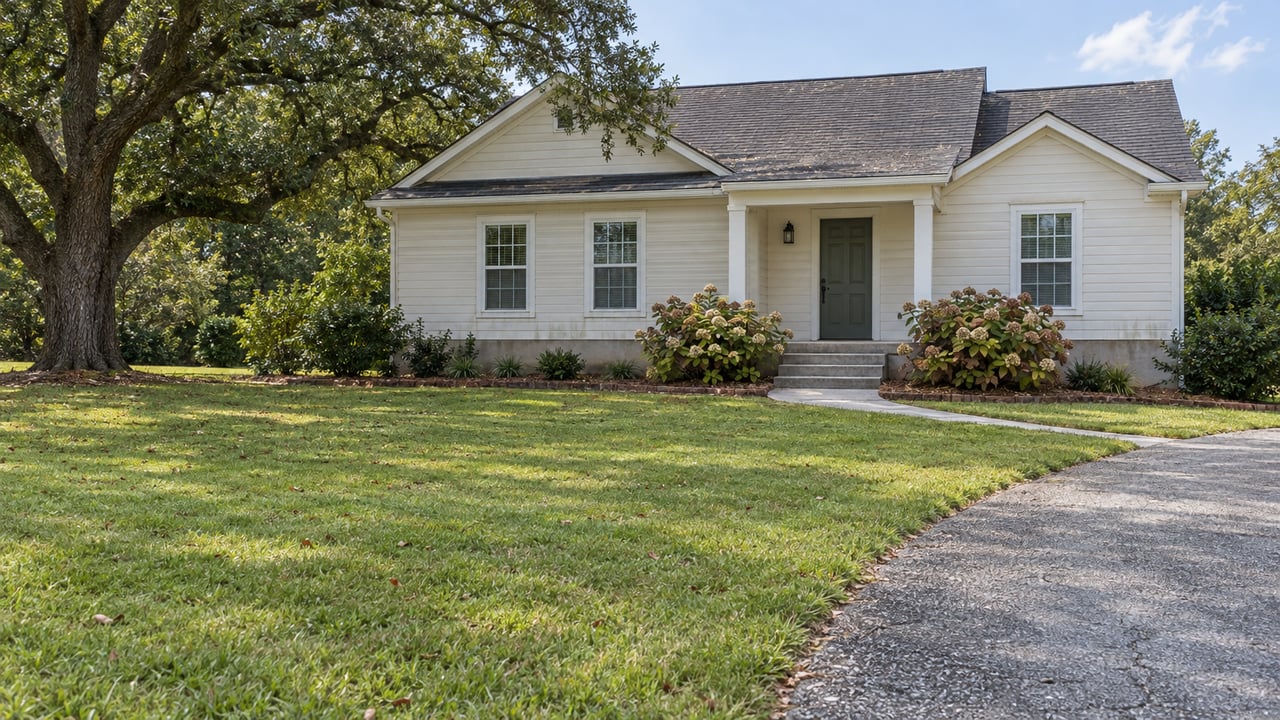
In March 2026, homeowners in Headland's Willow Walk subdivision learned from a Facebook post that their neighborhood had a homeowners association. WTVY reported that the developer had hired Community HOA Solutions to manage the neighborhood. The company said the association "has always existed on paper."
In a written statement to the station, the company said the Willow Walk Homeowners Association had "a long-standing legal foundation, with Articles of Incorporation filed with the Henry County Courthouse and the Alabama Secretary of State in March of 2007." Some residents had lived there for years without the HOA being enforced. When the story aired, no fee had been set. The management company said it planned to work with residents to form a board made up of homeowners.
For anyone buying in an older Headland subdivision, the useful part of the story is the date. Alabama's homeowners' association law draws a line at January 1, 2016. A declaration recorded on or after that date brings the association under the law, which gives a buyer the right to ask it for records. An older association is covered only if a majority of its members voted to opt in. Combine that with Alabama's buyer-beware rule for existing homes, and in an older neighborhood you're the one who has to find the paperwork.
The Line in the Statute
The Alabama Homeowners' Association Act is in Title 35, Chapter 20 of the Code of Alabama. Its applicability section, §35-20-3, reads:
This chapter applies to all developments subject to a declaration providing for a homeowners' association recorded in the office of the judge of probate in the county in which the development, or any part thereof, is located on or after January 1, 2016, and any association formed prior to that time, provided the association, by a majority of its members, elects to be governed by this chapter.
Coverage turns on two things: the date the declaration was recorded in the probate office, and for older associations, whether the members voted to opt in. Willow Walk's 2007 Articles of Incorporation are a corporate filing, and that date alone doesn't tell you when the neighborhood's declaration was recorded or whether its members ever voted to opt in. The same uncertainty applies to any Headland subdivision platted before 2016. A buyer finds the answer in the recorded documents.
The Alabama Secretary of State notes that the Act took effect January 1, 2016, and that its filing requirements apply to associations formed on or after that date.
What a Covered HOA Has to Hand Over
The 2016 date matters to a buyer because of §35-20-13. Under that section, an association subject to the Act must make records available to a member or "potential purchaser" on written request, within a reasonable time "not to exceed 30 days," after payment of reasonable costs. The association can provide the documents itself or point the requester to where the public record is kept.
A buyer of a home in a covered association can request:
- The most recent assessments, any approved assessments not yet in effect, and any mandatory dues with their due dates.
- Common areas the association owns, plus common areas it doesn't own but that dues help pay for.
- The current operating budget, any reserve funds, and a statement of financial condition for the last fiscal year.
- Proof of any insurance the association carries for lot owners, including any fidelity bond.
- Any loans against the association and the collateral behind them.
- The association's official name and current contact information for its officers and agent.
- The current covenants, conditions and restrictions with all amendments, plus current architectural control rules.
- Any initiation or transfer fees due at closing.
- A list of all existing common areas.
- Identifying information for any pending lawsuits, judgments, liens or arbitration involving the association that appear in a public record.
That list answers what the Willow Walk residents were asking about, including what the fees are and what they pay for. The obligation, though, applies to "a homeowners' association subject to this chapter." An association whose declaration was recorded before 2016, and whose members never voted to opt in, isn't covered by that section.
For those older associations, a legal overview from the Yates Anderson law firm explains that disputes fall back on common law, the recorded declaration and governing documents, and general corporate law. In practice, the old documents themselves decide what the association can do.
Buyer Beware Fills the Gap
Without a statute requiring an older association to produce records, the next question is whether the seller has to mention the HOA. The Alabama Real Estate Commission states that the Alabama Supreme Court has held caveat emptor to be the law for sales of existing homes. Under that rule, "neither the seller nor the seller's agents, unless asked, are required to disclose defects, except those which might pose an immediate health or safety risk to the buyers." Sellers can't misrepresent conditions they're asked about, and AREC says it is "most important that buyers perform their due diligence."
WTVY's coverage of Willow Walk made the same point and encouraged buyers to research a property's history and ask direct questions before buying. A seller who has lived in a neighborhood for years without an active HOA may honestly not think to mention one. That's why a direct question in writing, asked before the offer, carries so much weight.
Where the Paperwork Actually Lives
The WTVY report said buyers could pull covenants and bylaws from "circuit court records." The statute, however, ties HOA declarations to "the office of the judge of probate," and in Henry County that means the Probate Office in Abbeville.
According to Henry County's records page, recording is still handled at the Probate Office in Abbeville. The office keeps deeds going back to 1822 and accepts plats, deeds, contracts, judgments and liens for recording. The county also has an online land records lookup with account login and search instructions. Expect to sign in to use it.
For an older Headland subdivision, three documents answer most of the questions:
- The recorded declaration and its recording date. The date tells you which side of the January 1, 2016 line the association falls on.
- Any amendments or restatements. An older association that opted into the Act by majority vote should have a record of it.
- The recorded plat. It shows which areas were set aside as common property.
Newer communities still under construction in Headland, such as D.R. Horton's Heritage Ridge, would record any declaration well after 2016. If that community has an association, the Act's records section would apply automatically. Older neighborhoods are where a buyer has to do the checking.
Why an Activated HOA Has Teeth
An association that has been dormant for years can still carry real authority once someone activates it. For associations covered by the Act, §35-20-12 gives the association a lien for assessments unless its governing documents say otherwise. It sets notice requirements, requires a verified lien statement to be recorded within 12 months, and requires notice by certified mail at least 30 days before the lien is recorded. Under §35-20-11, a board's powers remain limited by the declaration and governing documents, and penalties are allowed only after the member has had a chance to be heard and to be represented by counsel.
For an older association outside the Act, the recorded declaration does the work those sections would otherwise do. That's one more reason to read it before you sign.
Questions to Put in Writing Before the Offer
- Is there a recorded declaration of covenants or an HOA for this subdivision, and when was it recorded?
- Has the association ever adopted the Alabama Homeowners' Association Act by member vote?
- Who manages the association today, and is there a homeowner board?
- Are any dues, assessments or transfer fees currently charged or under discussion?
- Which shared features, such as entrances, ponds, pavilions or walking paths, belong to the association, and who pays to maintain them?
- Has the seller received any notice from an association or management company?
The WTVY report suggested that buyers in subdivisions with shared features such as a pavilion or boardwalk ask whether HOA fees cover them. Question 5 asks that directly.
This post is general information about how Alabama law is written. It isn't legal advice. Before you rely on a specific declaration, have a real estate attorney or your closing attorney review it.
A Few Common Questions
Does an HOA formed before 2016 still have authority? It may. The association's authority comes from its recorded declaration and governing documents, along with common law and general corporate law.
Can an older Headland HOA come under the Act later? Yes. Section 35-20-3 lets an association formed before January 1, 2016 elect to be governed by the Act by a vote of a majority of its members.
How long does a covered HOA have to answer a buyer's records request? Under §35-20-13, it has a reasonable time not to exceed 30 days after a written request, and it can charge reasonable costs.
If you're looking at a home in one of Headland's older subdivisions and want to know what's recorded against it before you make an offer, Michael Dorriety can help you pull the covenants and recording dates from the Henry County Probate Office and add the right questions to your offer. Schedule a free consultation.