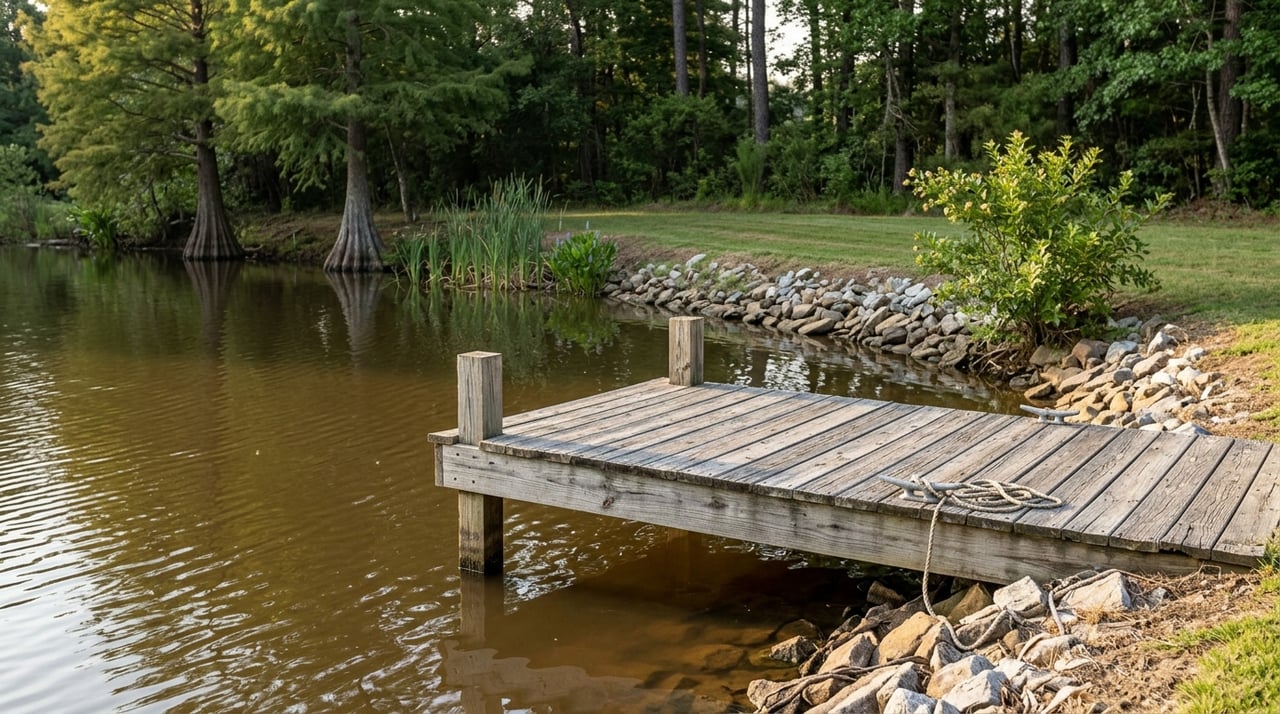
If a pond or creek near Slocomb has caught your eye, you are not alone. Waterfront features can make a property feel peaceful, private, and full of possibility, but they also bring questions that many buyers do not think about until they are deep into the process. This guide will help you understand what to look for, what to ask, and how to tell whether a waterfront property fits your goals and comfort level. Let’s dive in.
Why waterfront near Slocomb feels different
Around Slocomb and greater Geneva County, waterfront property often means a rural pond, creek frontage, or a small impoundment tied to acreage rather than a subdivision lot built around a view. That local setting matters because Geneva County is largely rural, with 574.49 square miles of land and 46.4 people per square mile according to the U.S. Census.
For you as a buyer, that usually means you are evaluating more than shoreline appeal. You are looking at land use, access, maintenance, water quality, and how the property functions day to day.
Understand the pond’s real purpose
A pond can be useful in several ways, but not every pond supports every use. Alabama Extension reports that small impoundments across the state are used for recreational fishing, aesthetics, irrigation, firefighting water, livestock water, and aquaculture, while owners also deal with issues like aquatic weeds, fish kills, poor fish growth, and leaks.
That is why it helps to ask a simple question early: What do you want the water feature to do for you? A pond that looks attractive from the porch may not be ideal for fishing, livestock use, or long-term low-maintenance ownership.
Inspect the watershed, not just the water
One of the biggest buyer mistakes is focusing only on the pond surface. Alabama Extension explains that pond condition depends heavily on the watershed and how the pond was built. Poor construction, seepage, shallow water, erosion, and contamination can all create management problems that are hard to fix later.
When you tour a property, pay attention to the land that drains into the pond. Nearby cropland, pasture, livestock areas, and disturbed soil can all affect water quality and upkeep over time.
What the watershed can tell you
The surrounding land often reveals how much work a pond may need. Extension guidance notes that runoff from overfertilized pastures, livestock areas, and cropland can introduce nutrients or pesticides, while a grass or sod buffer can help reduce problems.
In plain terms, the land around the pond matters almost as much as the pond itself. If the setting looks clean, stable, and manageable, that is a good sign. If you see bare banks, erosion, or runoff concerns, ask more questions.
Check depth and construction basics
A pond’s shape and depth affect its usefulness. According to Alabama Extension pond-building guidance, ponds with an average depth under about 3 feet are more likely to have aquatic weed problems and fish kills from low dissolved oxygen.
That matters if you picture family fishing or consistent water quality. A shallow pond may still add scenic value, but it may not perform the way you expect.
Soil and water retention matter
Extension also notes that good pond sites need soils that hold water well, with clay or silty clay preferred and coarse sands considered unsuitable. If a pond leaks or struggles to hold water, the issue may be tied to how it was built or to the underlying soils.
If you are considering a property with plans for a new pond or major pond improvements, Alabama Extension advises checking with the U.S. Army Corps of Engineers or NRCS if wetland areas could be affected. That is an important due diligence step before you count on future changes.
Know the fishing limits of small ponds
It is easy to assume every farm pond can become a great fishing pond. In reality, pond size sets limits. Alabama Extension says ponds smaller than 1/2 acre are very difficult to manage for bass and bream.
That does not make a smaller pond a bad feature. It simply means you should match your expectations to the size and condition of the water. Some ponds are best for scenery, wildlife viewing, or light recreation rather than a carefully managed fishing setup.
Review flood risk carefully
If the property includes creek frontage or low-lying ground, flood risk needs special attention. FEMA explains that Special Flood Hazard Areas are mapped flood zones where NFIP floodplain regulations apply and mandatory flood insurance rules can apply in some cases.
Just as important, lower-risk areas are not no-risk areas. FEMA notes that moderate- and low-risk areas can still flood, and nearly 1 in 4 NFIP claims come from those zones.
Questions to ask about flood exposure
Before you move forward, consider asking:
- Is any part of the home site, access road, or usable land in a mapped flood zone?
- Has the property experienced flooding, standing water, or washouts?
- Will flood insurance be required for the home or structures?
- Does the water feature improve the property’s use, or create limits you need to plan around?
Do not overlook septic and well systems
On rural properties, the house systems deserve just as much attention as the water feature. The EPA’s guide for homebuyers with septic systems recommends having septic systems inspected before purchase. EPA also notes that tanks are commonly inspected every 1 to 3 years and typically pumped every 3 to 5 years.
If the property has a private well, regular testing is also important, especially after flooding or nearby land-use changes. EPA further notes that septic contamination risk is lower when the system is farther from bodies of water.
For you, the takeaway is simple: if there is a pond, creek, well, and septic system on the same property, each one affects the others. A solid inspection strategy should look at the whole setup together.
Think about maintenance before you buy
Waterfront ownership is not just about weekends by the bank. It also comes with ongoing care. Alabama Extension says ponds may need liming every 2 to 4 years, and applying lime during warm months can trigger oxygen depletion and fish kills.
Extension also notes that oxygen depletion and disease are common causes of fish kills in Alabama ponds. That means even a beautiful pond can require active management.
Access makes maintenance easier
The physical layout of the property matters more than many buyers expect. Extension guidance explains that larger ponds may need truck access to the shoreline for liming, and dam and spillway maintenance includes mowing vegetation, repairing erosion, and keeping trees off the dam and emergency spillway.
When you walk the land, look for practical access points. If equipment cannot reach the shoreline or dam easily, maintenance may be harder and more expensive over time.
What makes a waterfront property more marketable
Not every pond or creek frontage adds value in the same way. USDA Forest Service research notes that water-adjacent property has aesthetic value and attracts wildlife, while the effect on property value can vary based on location and water quality or clarity.
In practical terms, the most appealing properties are often the ones that balance enjoyment with manageable upkeep. Buyers tend to respond well to water access that feels usable, clear information about flood and septic considerations, and land that is easy to maintain.
A simple buyer checklist
If you are comparing pond and waterfront properties near Slocomb, keep this checklist handy:
- Confirm the water feature’s main use: scenery, fishing, livestock, irrigation, or mixed use
- Ask about pond depth, water-level changes, and any history of leaks or fish kills
- Look at the watershed and nearby land uses that may affect runoff
- Review flood-zone information for the home site, road access, and low areas
- Inspect septic and well systems with the same care you give the pond
- Evaluate shoreline, dam, and spillway access for maintenance equipment
- Match your fishing and recreation goals to the pond’s actual size and condition
- Ask whether future pond work could involve agency review if wetlands are present
Local help can make the process easier
If you are buying in the Slocomb area, local knowledge goes a long way. The Geneva County Extension Office lists an Aquatic Resources agent who can be a useful resource for pond questions, maintenance concerns, and local guidance.
And when you are evaluating lifestyle property, it helps to work with someone who understands both the real estate side and the land itself. If you are looking at pond or waterfront property near Slocomb, Michael Dorriety can help you sort through the practical details so you can buy with more confidence.
FAQs
What should you inspect first on a pond property near Slocomb?
- Start with the pond’s purpose, depth, watershed, flood exposure, and the condition of any septic or well systems on the property.
Can a small pond near Slocomb be good for fishing?
- It can support light recreational use, but Alabama Extension says ponds smaller than 1/2 acre are very difficult to manage for bass and bream.
Do creek-front homes near Slocomb always require flood insurance?
- Not always, but FEMA says properties in Special Flood Hazard Areas can be subject to mandatory flood insurance rules, and lower-risk areas can still experience flooding.
Why does pond depth matter for waterfront buyers in Geneva County?
- Shallow ponds are more likely to have aquatic weed problems and fish kills caused by low dissolved oxygen, which can affect enjoyment and upkeep.
Should you test a well and inspect a septic system on rural waterfront property?
- Yes. EPA recommends septic inspection before purchase, regular upkeep, and ongoing well testing, especially after flooding or nearby land-use changes.
Where can you get pond guidance in Geneva County, Alabama?
- The Geneva County Extension Office is a practical local resource, and it lists an Aquatic Resources agent for county-specific pond questions.